
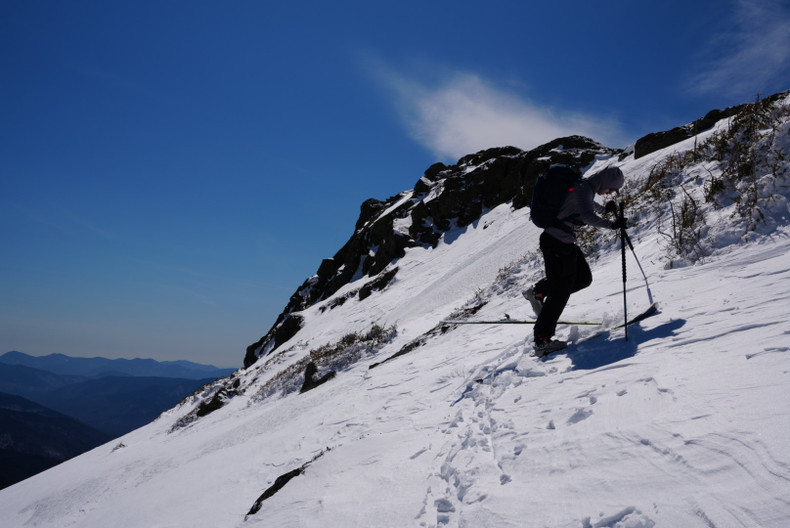
Hired on as the full-time designer at Ragged Mountain Equipment just a few months ago, one of my first tasks was to get familiar with the current product line. As I walked the retail floor and pawed through hundreds of archived samples in the design room, one piece of clothing in particular caught my eye, the previously named Fall Line Hoody now Stretch Grid Air Hoody.
Made from Polartec’s lightweight Power Grid fabric, this layer was very intriguing. It reminded me of the classic Melanzana hoodie, but more breathable and free of excess features like a sweatshirt-style front pocket. Simple, breathable insulation, what more could you ask for in a winter layer?
I grabbed one off the shelf and started wearing it throughout the winter. It’s joined me on almost every ski tour since.
Always on the hunt to up our skills in the backcountry, my partner Carley and I booked a day out with IFMGA-accredited guide Keith Moon from Vertex Mountain Guides to help develop decision-making skills in new terrain. As a side quest for this adventure, I thought it would be the perfect time to really put the Stretch Grid Air Hoody to the test.
On the morning of our day out, we met at Pinkham and discussed our plan. Many ideas were tossed around, but we eventually landed on making the trek to check out Oakes Gulf. The sun was shining, and with summer-like temps forecasted, we knew we were in for a killer day.
As we started up the TRT, I had a lightweight tech T-shirt on as my base layer, the Stretch Grid Air Hoody as my midlayer, with a puffy and shell jacket stored away in my backpack. The temperature was about 50° F and rising. We put on our skis at Pinkham and picked our way up the Tuckerman Ravine Trail to Hermit Lake, taking alternate lines through the trees to avoid removing our skis because of a lack of snow coverage.
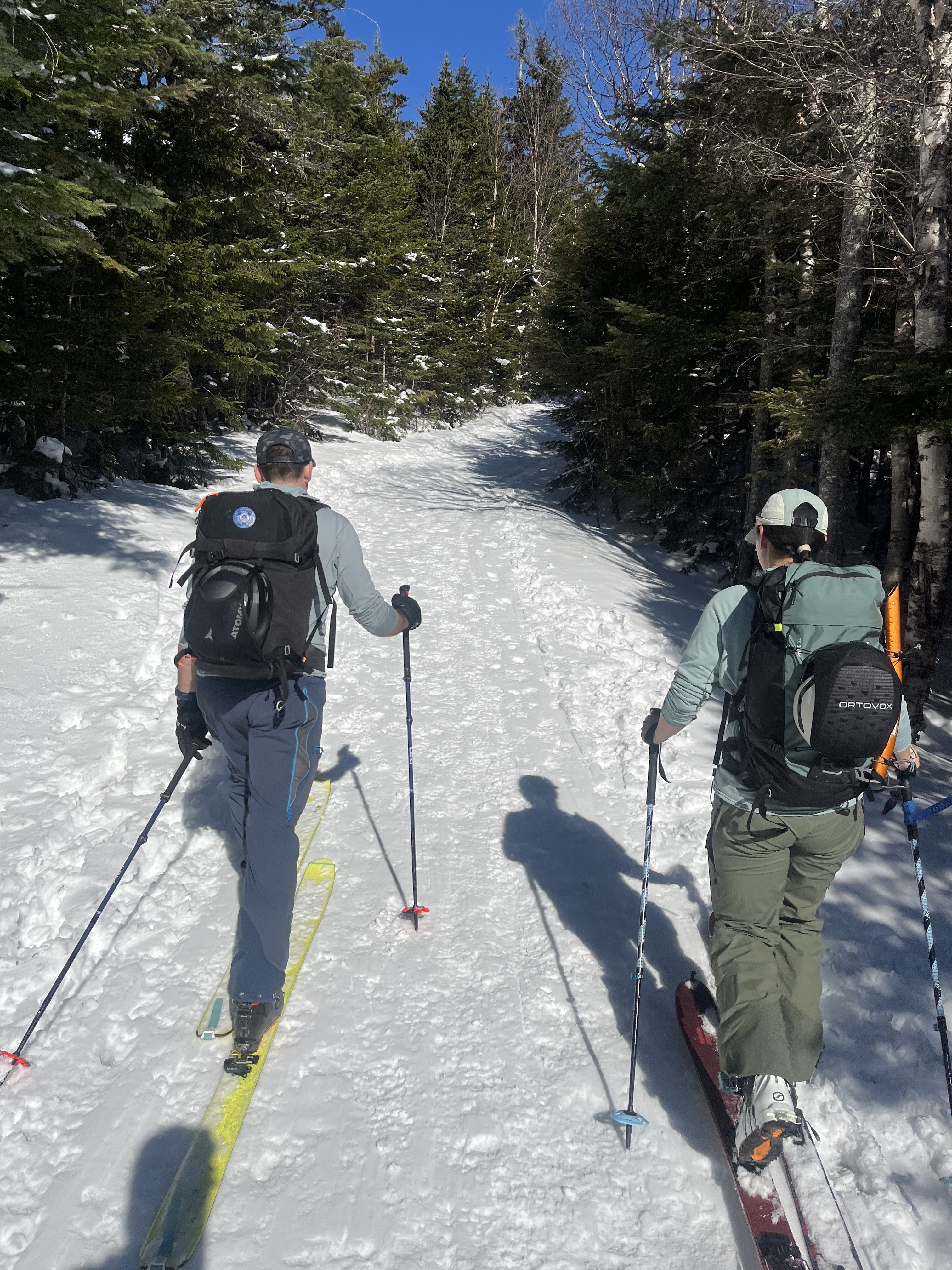
Following Keith and Carley up the TRT
The Stretch Grid Air Hoody did a very good job dumping the heat I was generating as we steadily made our ascent. As we passed by HoJo’s, the hut at Hermit Lake, we waved hello to some familiar faces who happened to be there. We continued onward to the base of Hillman’s Highway, our planned ascent route into the alpine.
At the base of Hillman’s, we transitioned from skis to crampons, and I contemplated pulling my shell out of my bag as some wind hit us. It looked like it might pick up as we gained elevation. I ended up keeping just the hoody on to see how it fared when the winds increased. While it was immediately obvious the wind cut right through the fabric, once we got moving it trapped just enough body heat to keep me comfortable during the ascent.
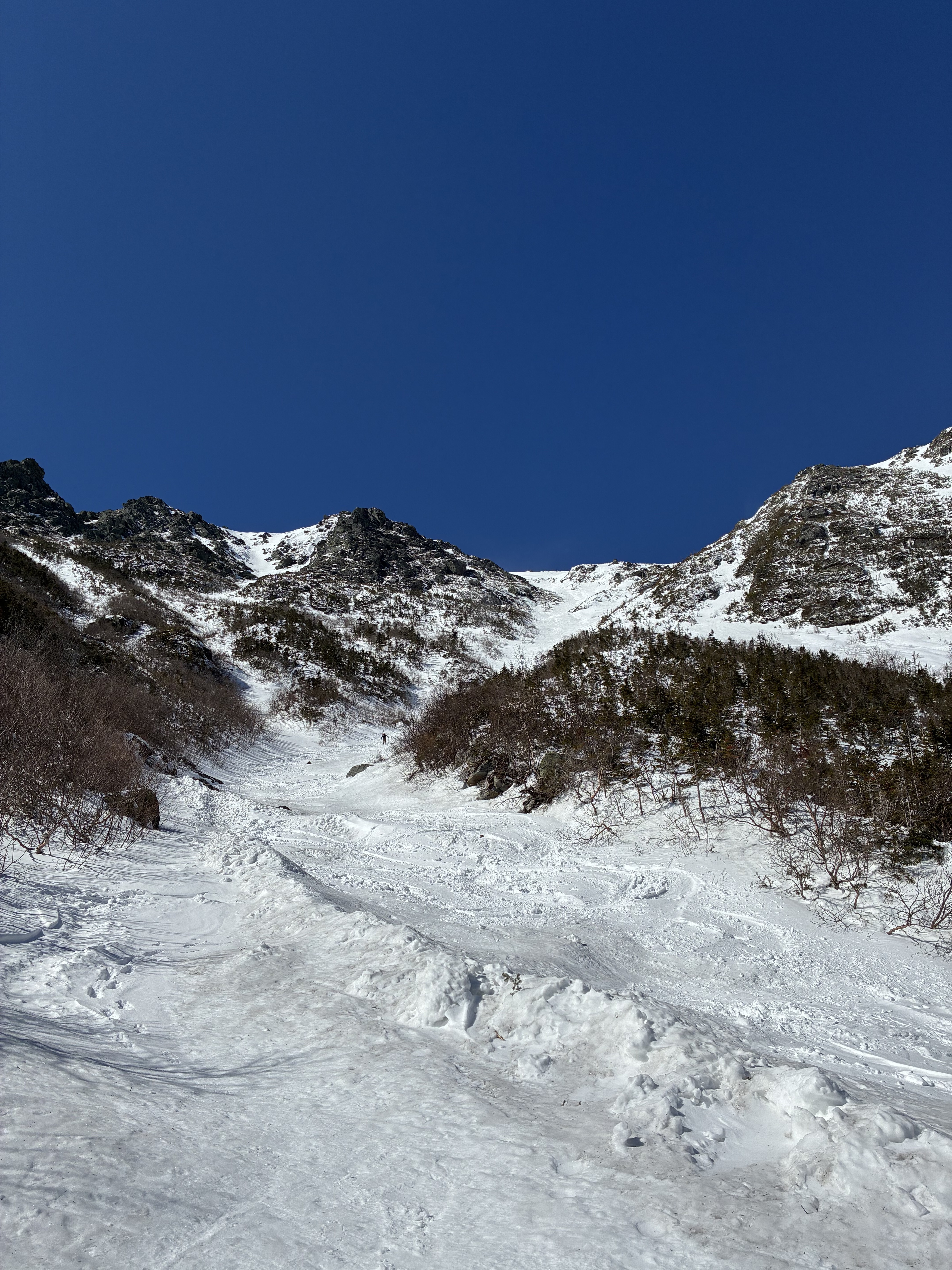
The base of Hillmans Highway
We zig-zagged our way up Hillman’s and crested the top, where the air was surprisingly still. We stopped for a snack break, and while standing there enjoying my sandwich, I threw my puffy on to stay warm. We switched back to skis and started our journey across the alpine toward Oakes. I opted to keep my puffy on as the winds began to pick up, and we were soon greeted with strong gusts coming over the ridge.
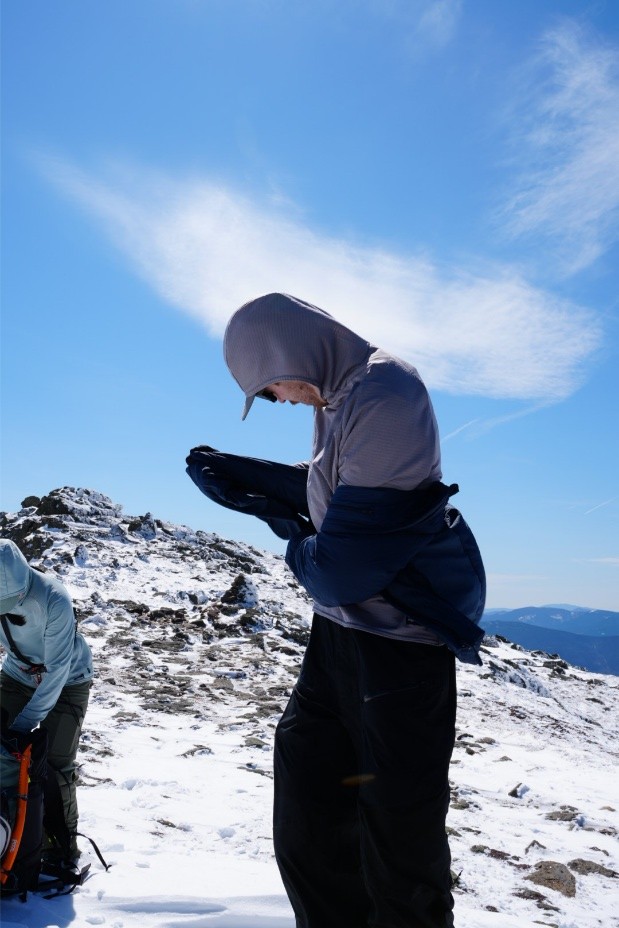
Throwing my puffy on.
When we got to Oakes, we scoped out a few lines but eventually decided to drop into Main Gully. Puffy still on, we got first tracks through some hot pow. Now at the bottom of the drainage, protected from the wind, I pulled my puffy off as we basked in the sun and enjoyed a snack.
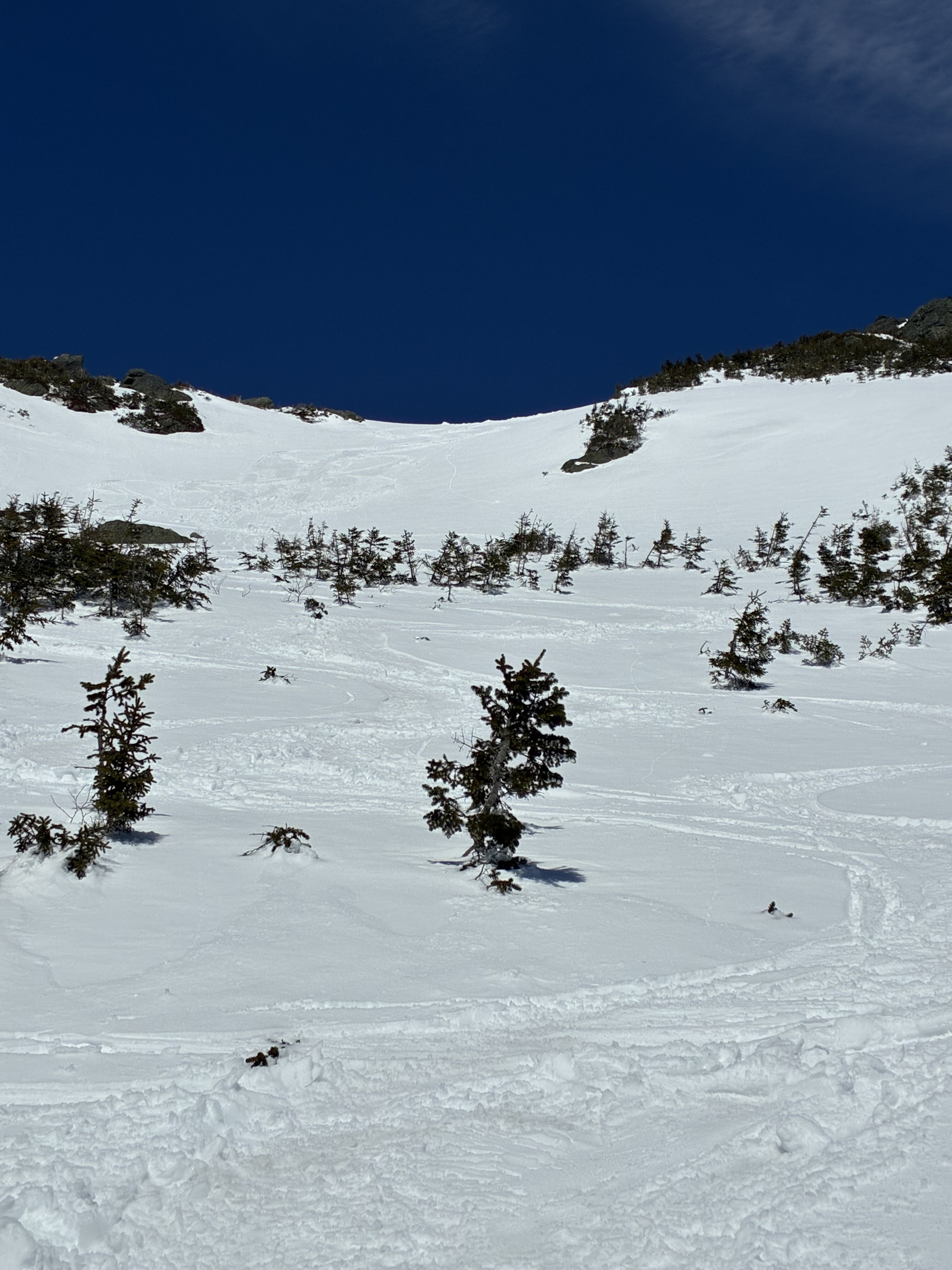
Looking back at our turns down Main Gully.
We eyed up Robinson’s Neighborhood for some lower-angle turns and set a skin track to the top. As we got closer to Mount Monroe, we noticed the snowfields were in, and we set a course for the summit, not because the skiing looked great, but because “skiing off the top of Mount Monroe would be pretty cool.”
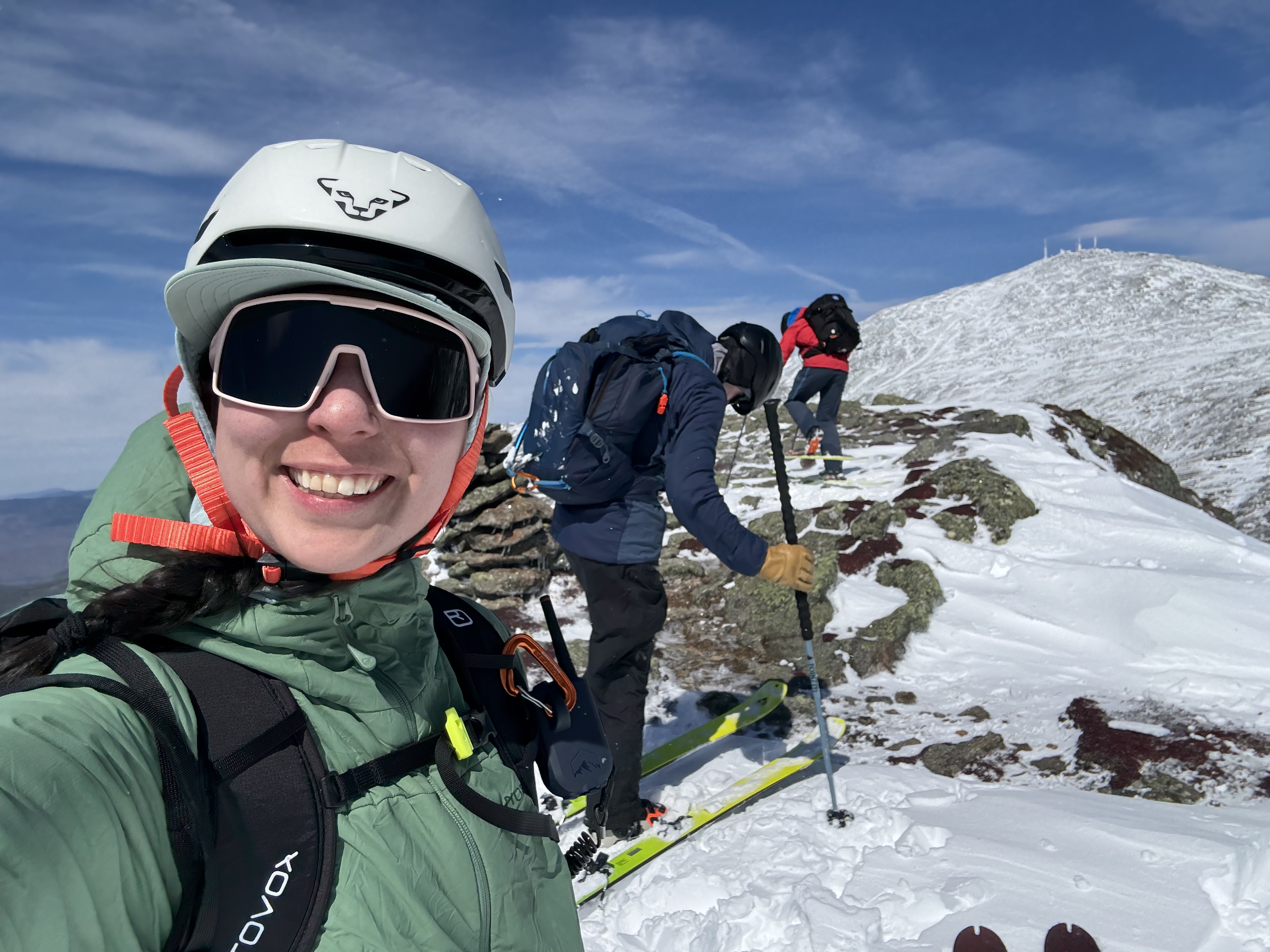
Carley cheesing during our gusty transition on Mt. Monroe.
We gained the summit and were greeted by the wind once again this time blowing closer to about 50MPH. Puffy on. We ripped skins and linked the Monroe Snowfields into Robinson’s Neighborhood. Back at the base of the drainage, we transitioned to skins, I took my puffy off, and we began our ascent out of Oakes.
Once we reached the top, we charted a course across the alpine toward our exit: Right Gully. This time, the wind wasn’t as bad, and I was very comfortable in just the Stretch Grid Air Hoody and my base layer T-shirt. We put skis on around the Southeast Snowfields, and I threw my puffy back on, where it stayed for the remainder of the day.
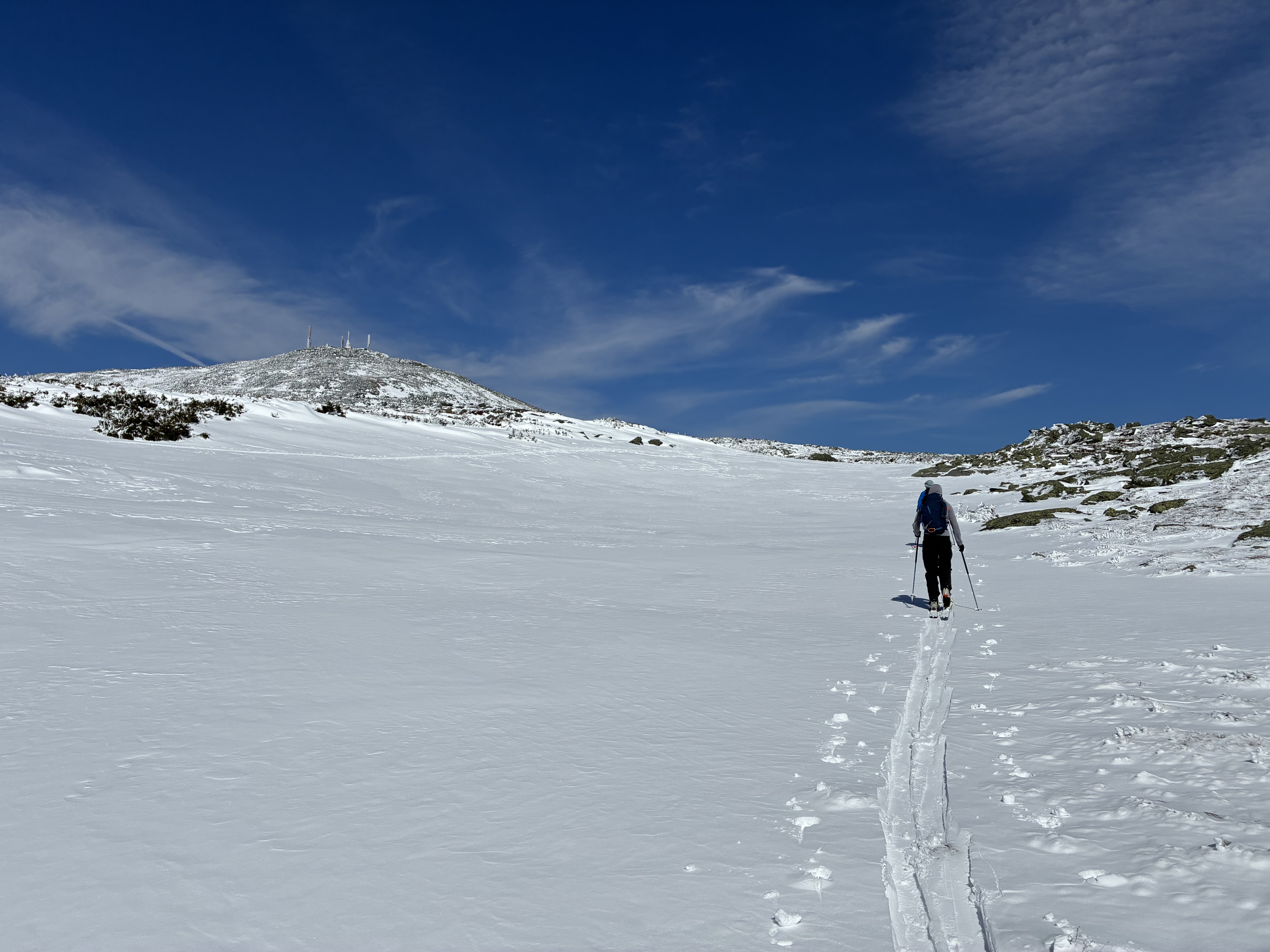
Headed back across the alpine towards our exit.
We dropped into Right Gully and skied to the base of the bowl. Heading back to HoJo’s, we tried to keep our skis on as long as possible, which turned into a game of taking them on and off repeatedly. When we arrived, I was dripping with sweat, wishing I had taken my puffy off during the walk–ski–walk cadence.
We stopped briefly for water and then headed straight down the Sherb, where we were greeted with surprisingly decent snow conditions, despite a fair number of rocks. Dodging rocks, and a group of rogue children, we skied to where the rangers had placed a closed sign across the trail. We cut over to the TRT, stowed our skis, and hiked the rest of the way out.
During the walk, we debriefed with Keith, chatting about our main takeaways and what we had learned. We parted ways at the car, thanking him for his guidance. As we were loading up, we noticed those familiar faces from earlier at HoJo’s, now set up in lawn chairs enjoying a beer at the edge of the Pinkham parking lot. We walked over and joined them, a great end to the day.
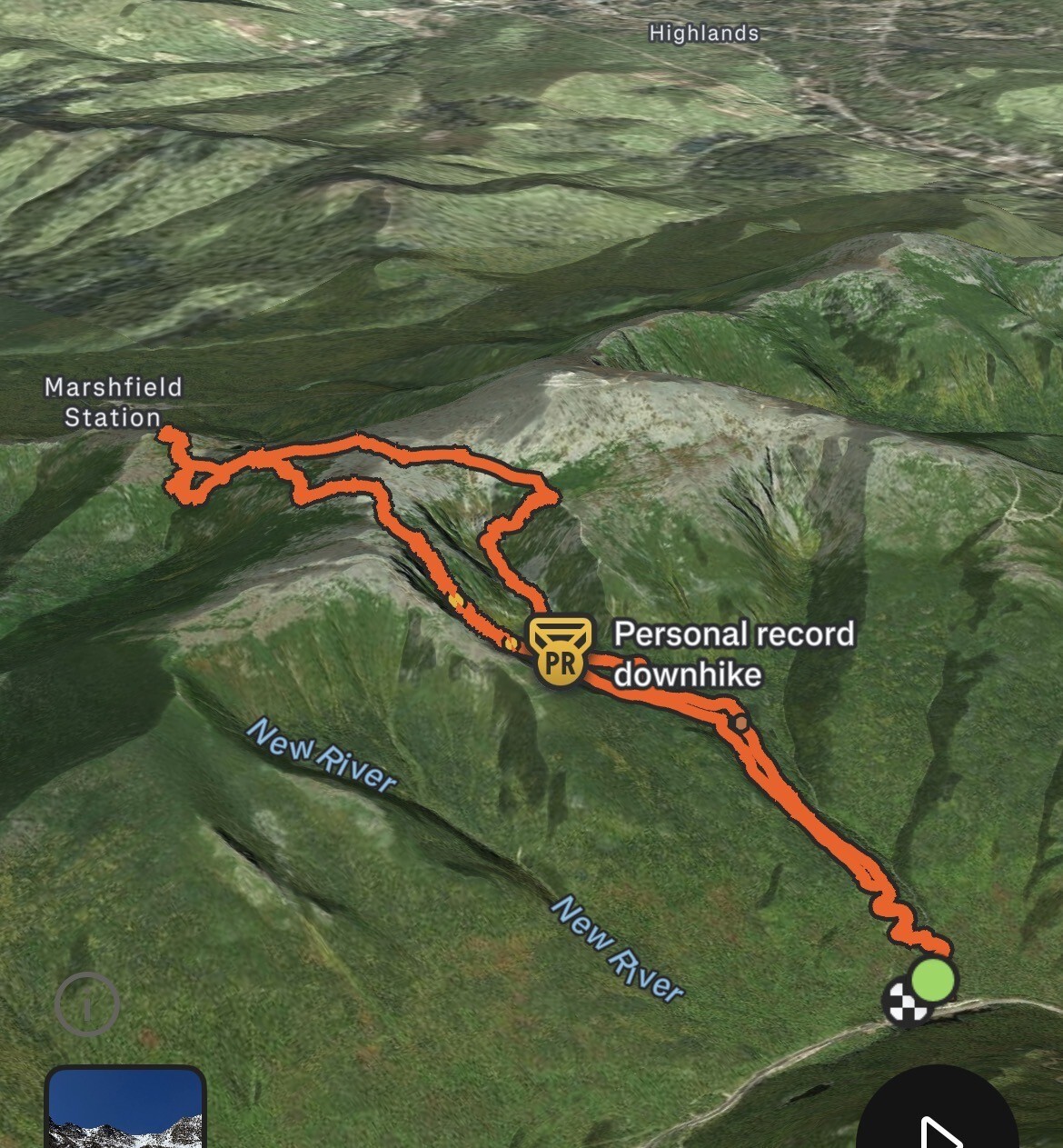
Our GPS track from the day.
Overall, I’ve been very impressed with the unassuming Stretch Grid Air Hoody. I was able to switch between only my hoody and a puffy over the course of an 8 hour day in the mountains. Although the fabric is not UPF rated, I also had the hood up for the entirety of the day and it did a great job keeping the sun off my neck. This is truly a piece that lets the fabric do the heavy lifting in the best way possible. It’s stripped down in terms of features, making it lightweight and unfussy. It dumps heat well but still keeps you warm when needed. While wind cuts through it, when paired with the appropriate shell and insulating layers, this hoody has become a cornerstone of my backcountry layering system.